
The History of Solar Energy
Things to Know Before Buying a Solar System
August 24, 2026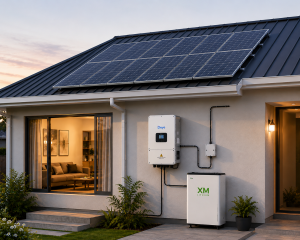 Solar energy may seem like a modern technology, but humans have been using the power of the sun for thousands of years.
Today, solar panels can be found on homes, businesses, farms, and large-scale power plants around the world. But the journey to modern solar technology began long before the invention of the first solar panel.
Ancient Humans and the Sun
Long before electricity existed, ancient civilizations understood the importance of sunlight.
The Greeks and Romans designed buildings to take advantage of the sun’s warmth and natural light. People also used sunlight for practical purposes such as drying food, heating water, and creating fire.
The sun was essentially humanity’s earliest source of energy.
The Discovery of the Photovoltaic Effect
A major breakthrough came in 1839, when French physicist Alexandre-Edmond Becquerel discovered the photovoltaic effect.
He observed that certain materials could produce a small electric current when exposed to light.
Although the amount of electricity produced was very small, the discovery laid the foundation for the development of solar cells.
The First Solar Cell
In 1883, American inventor Charles Fritts created one of the first working solar cells by coating selenium with a thin layer of gold.
The technology was still inefficient, but it demonstrated that sunlight could be directly converted into electricity.
Over the following decades, scientists continued experimenting with different materials and methods to improve solar cells.
The Silicon Solar Cell
One of the biggest breakthroughs came in 1954, when researchers at Bell Laboratories developed the first practical silicon solar cell.
The new cell was significantly more efficient than earlier designs and demonstrated that solar energy could potentially become a practical source of electricity.
This breakthrough changed the future of solar technology.
solar energy goes to space
Solar technology found an important application in the space industry.
In the late 1950s, solar cells began being used to power satellites. Solar energy was particularly useful in space because sunlight was readily available and satellites needed a reliable source of electricity.
The success of solar power in space helped demonstrate its potential for applications on Earth.
The Growth of Solar Energy
For many years, solar technology remained relatively expensive, which limited its widespread use.
However, improvements in manufacturing, technology, and investment gradually reduced the cost of solar panels.
Solar energy began moving from a specialized technology into a more accessible source of electricity for homes, businesses, and large-scale projects.
Today, solar panels are used across the world to generate clean electricity.
Solar Energy Today
Modern solar systems are much more advanced than the early solar cells developed in the 19th and 20th centuries.
A typical solar power system can include:
* Solar panels – capture sunlight and convert it into electrical energy.
* Inverter – converts the electricity into a form that can be used by household and business appliances.
* Battery storage – stores excess energy for use when sunlight is unavailable.
* Charge controller and other components – help manage and protect the system.
With improvements in battery storage and solar technology, solar energy is becoming an increasingly practical option for people and businesses looking for more reliable and sustainable power.
The Future of Solar Energy
The history of solar energy is a story of continuous innovation.
What began as a scientific discovery has developed into a major source of renewable energy. As technology continues to improve, solar systems are expected to become even more efficient, affordable, and accessible.
For countries such as Nigeria, where reliable electricity remains an important concern for households and businesses, solar energy can play an increasingly important role in creating more dependable power solutions.
Conclusion
Solar energy has come a long way—from humans simply using sunlight for warmth to sophisticated solar systems capable of powering homes, businesses, and entire communities.
The technology may have a long history, but its story is far from over.
The future of energy is changing and the sun is playing a major role
